Games
Top 10 Board Games: A Journey Through Strategy and Entertainment

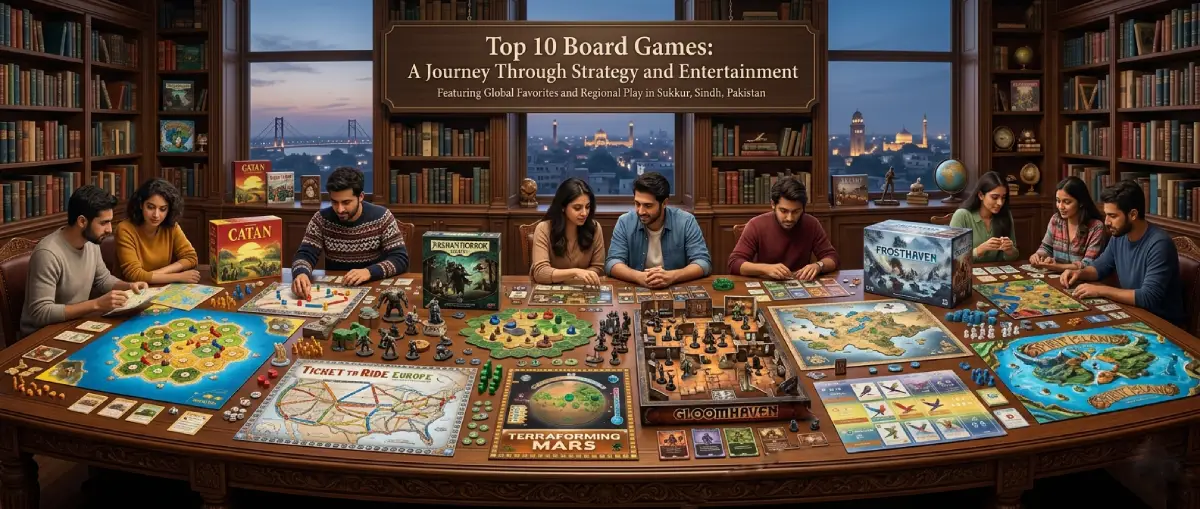
Board games have long been a source of entertainment, education, and social connection. They offer a unique way to challenge the mind while bringing friends and family together. Whether you are a seasoned player or new to the world of board games, this comprehensive guide will introduce you to ten exceptional games that combine timeless appeal with strategic challenges.
From classics that have stood the test of time to modern inventions created for interactive fun, board games continue to evolve. They bring people together to share laughter, friendly competition, and moments of deep concentration. In this article, we explore a list of ten board games that cater to various tastes and skill levels. Each title offers its own flavor, strategy, and chance to create memorable experiences.
Understanding the Appeal of Board Games
In an era of digital entertainment, the charm of board games remains undeniable. They rely on face-to-face interaction, tactile components, and nuanced strategies to create lasting impressions. Many players appreciate the blend of luck and skill these games offer. Moreover, board games foster teamwork, strategic planning, and even a bit of healthy competition. This combination of factors makes them a popular choice for game nights and social gatherings.
For many enthusiasts, board games are more than just a pastime. They represent an opportunity to learn problem-solving skills, think critically, and communicate effectively. The diversity in game mechanics—from cooperative challenges to intense head-to-head battles—ensures that there is something for everyone. The ability to adapt rules and explore different gameplay styles makes board gaming a versatile and ever-engaging hobby.
Exploring the Top 10 Board Games
The following list presents ten board games that have left their mark on the community. Each game has unique features that make it appealing to different players and situations. Enjoy your exploration as we delve into a variety of gaming experiences that balance strategy, luck, and fun.
- Chess – An age-old classic that requires deep strategic thinking and foresight, chess remains a favorite for those who love mental challenges.
- Monopoly – A game of real estate and economic strategy, Monopoly captivates a wide range of players with its mix of luck and planning.
- Scrabble – Enhancing vocabulary while strategizing with letter placement, Scrabble is a delightful mental workout.
- The Settlers of Catan – Known for its resource trading and strategic expansion, Catan offers a balanced mix of negotiation and planning.
- Ticket to Ride – A game of routes and connections, Ticket to Ride brings strategy and competitive travel planning to the table.
- Risk – For those who prefer global strategy and conquest, Risk provides a thrilling experience of controlling territories and forming alliances.
- Carcassonne – This tile-laying game challenges players to build medieval landscapes, emphasizing both strategy and creativity.
- Clue – A classic mystery game that requires deduction and logic as players piece together the details to solve a crime.
- Codenames – Encouraging team collaboration and clever clue-giving, Codenames provides light-hearted fun with a competitive edge.
- Pandemic – A cooperative game where players work together to stop global outbreaks, Pandemic tests teamwork and resource management.
Each game in this top 10 list has earned its place by offering dynamic gameplay that caters to diverse interests. While classics like Chess and Monopoly stand strong with their historical roots, modern games such as Pandemic and Codenames have redefined how strategy games are played. These titles not only entertain but also sharpen the mind through intricate decision-making and planning.
Why These Games Continue to Thrill
The popularity of these board games can be attributed to their ability to connect players and create lasting memories. For example, Chess has been a symbol of strategy for centuries, while Risk transforms simple gameplay into an epic battle for domination. Scrabble, with its emphasis on word formation, is perfect for language lovers who enjoy both competition and learning.
Carcassonne, with its ever-changing board, nods to creativity and tactical planning. In contrast, Ticket to Ride invites players to map out routes while competing for the longest train path. The diversity of these games means that there is always something new to discover, regardless of your gaming experience. They are designed to be accessible to beginners while offering enough complexity for seasoned strategists.
Some board games also encourage a mix of cooperation and competition. Pandemic, for instance, is a cooperative game that relies on teamwork and strategic resource allocation. It challenges players to combine their strengths to overcome a common enemy. This duality of approach makes board gaming a versatile hobby that can be enjoyed in various social settings.
The Role of Community and Shared Experiences
Board games also play a significant role in building community. They bring together people from different backgrounds and cultures, encouraging social interaction and shared experiences. Many gamers form clubs, participate in tournaments, and even attend conventions. The collective enthusiasm for board games not only strengthens bonds among friends and family but also creates a larger sense of community among players worldwide.
This shared excitement is often amplified during game nights where laughter, debate, and animated strategizing come together. The communal aspect of board games reinforces the value of in-person interactions, even in times when digital communication has become the norm. Games like Clue and Codenames are particularly popular because they require players to collaborate and sometimes even bluff their way to victory.
Integrating Board Games Into Modern Lifestyles
Modern lifestyle challenges have not diminished the appeal of classic board games. In fact, many players find that these games offer a welcome respite from the constant connectivity of digital devices. The tactile nature of game pieces, cards, and boards allows players to disconnect from screens and engage in meaningful interactions.
Some enthusiasts even blend traditional gaming with online communities, discussing strategies and planning meet-ups. For instance, discussions on forums, blogs, and social media channels help maintain interest and promote various board games. One popular website that frequently touches on exciting gaming topics is https://icefishinglive.co.uk/ which occasionally features insights that extend beyond typical board game reviews.
Key Elements to Enjoy Board Games Fully
Maximizing enjoyment from board games often depends on the atmosphere and the players involved. Here are a few tips that might help enhance your game night experience:
- Choose games that suit the interests and skill levels of your group.
- Mix up game types to keep the experience fresh and engaging.
- Create a comfortable playing space with good lighting and minimal distractions.
- Encourage sportsmanship and open discussion throughout gameplay.
By keeping these points in mind, you ensure that each game session becomes an opportunity to bond, strategize, and unwind. The strategic planning involved also helps improve critical thinking and problem-solving skills.
The Enduring Legacy of Board Games
Throughout history, board games have entertained, educated, and united people. Whether played in a quiet living room or at a bustling game convention, they offer an experience that is both timeless and evolving. The balance of strategy, luck, and human interaction in these games contributes to their lasting appeal.
The top 10 board games presented in this article serve as a reminder of how play can enrich our lives. They invite participants to experience the delicate blend of competition and camaraderie that is hard to find in other forms of entertainment.
Diving into this world of board games opens up avenues for creative thought, intellectual challenge, and social connection. Each game provides its own unique set of rules and challenges, ensuring that no two game nights are ever the same. The excitement of unveiling a new strategy or learning from a loss fuels the endless appeal of these games.
In essence, the top 10 board games demonstrate the power of simple, well-thought-out mechanics that can transcend generations. Their ability to consistently attract new players while retaining long-standing devotees confirms their place in the world of strategic entertainment.



In the hyper-connected landscape of 2026, the definition of a “good” internet connection has shifted. It is no longer enough to simply boast high download speeds measured in hundreds of Megabits per second (Mbps). For the modern digital enthusiast—whether you are a professional eSports competitor or someone who demands flawless performance for real-time interactive platforms like https://www.outlookindia.com/xhub/e-gaming/best-10-baccarat-direct-sites-2026 — the true metric of success is stability and ultra-low latency.
When we talk about “Pro-Level” gaming, the enemy isn’t slow downloads; it is Latency (Ping) and Jitter. Latency is the time it takes for a data packet to travel from your device to a server and back. High latency results in the dreaded “lag,” where your actions in a digital environment feel delayed or disconnected from reality. Jitter, on the lne hand, is the fluctuation in that latency, causing unpredictable stutters that can ruin even the most intense gaming sessions.
The Technical Foundation: Beyond the Speed Test
To build a network capable of handling high-stakes, real-time data, you must understand the core entities of networking: Bandwidth and Throughput. While bandwidth represents the maximum capacity of your “data pipe,” throughput is the actual amount of data successfully moving through it. In a household crowded with smart fridges, 4K streaming TVs, and security cameras, your effective throughput can drop significantly due to network congestion.
To prevent this, the first step in a pro-level setup is transitioning from wireless uncertainty to Ethernet Supremacy. While Wi-Fi 7 has made incredible leaps in recent years, nothing beats the dedicated lane provided by a Cat6a or Cat7 Ethernet cable. A physical connection eliminates electromagnetic interference from household appliances and provides a stable, predictable path for your most critical data packets, ensuring that your “ping” remains as flat as possible.
Hardware Essentials: The Engine of Your Network
A professional setup begins with the heart of your home: the Router. For 2026 standards, an entry-level router will struggle to manage the sheer volume of simultaneous connections in a modern smart home. You need a high-performance gateway equipped with a multi-core processor capable of handling complex Quality of Service (QoS) rules. Furthermore, to leverage the latest advancements in wireless technology, it is crucial to ensure your hardware adheres to the official Wi-Fi Alliance standards, particularly when utilizing the 6GHz band found in Wi-Fi 6E and Wi-Fi 7 routers.
Key Hardware Requirements:
- Wi-Fi 6E or Wi-Fi 7 Compatibility: To leverage the newly available 6GHz band, which is much less crowded than the traditional 2.4GHz and 5GHz frequencies.
- Advanced CPU Power: Essential for managing high-speed packet processing without introducing new latency.
- Multi-Gigabit WAN Ports: To fully utilize modern fiber-optic internet plans that exceed 1Gbps.
We established that a pro-level gaming setup requires more than just high download speeds; it demands ultra-low latency and robust hardware like Wi-Fi 7 routers and Cat6a cabling. However, having the best hardware is only half the battle. The true difference between a standard connection and a professional-grade environment lies in Software Optimization—the fine-tuning of your network to ensure that every bit of data reaches its destination without interruption.
Advanced Optimization: Fine-Tuning Your Connection
Once your hardware is in place, the next step is to configure your router’s internal logic to prioritize what matters most. The most powerful tool at your disposal is Quality of Service (QoS).
In a modern household, your network is constantly juggling different types of traffic: a 4K Netflix stream, a heavy Windows Update, and an intense online gaming session. Without QoS, your router treats all these packets equally, which can lead to “Bufferbloat”—a phenomenon where large data transfers cause spikes in latency. By configuring QoS rules, you can instruct your router to give Highest Priority to gaming packets (UDP traffic) and real-time web interactions, ensuring that even when the house is busy, your connection remains rock-solid.
Furthermore, don’t overlook your DNS (Domain Name System) settings. While your ISP provides default DNS servers, they are often not optimized for speed. Switching to high-performance providers like Cloudflare (1.1.1.1) or Google (8.8.8.8) can reduce the time it takes for your device to resolve web addresses, contributing to a snappier, more responsive browsing experience across all platforms.
Managing the “Silent Killers” of Bandwidth
Even with a high-end router, certain “background hogs” can silently degrade your performance. In 2026, our smart homes are more active than ever, and many devices operate in the shadows of your network usage.
Common bandwidth culprits include:
- Cloud Synchronization: Services like Dropbox, OneDrive, or iCloud that trigger massive uploads every time you save a file.
- Automated System Updates: Large OS patches or Steam game updates downloading during peak gaming hours.
- IoT Noise: Smart cameras and security systems that continuously upload high-definition video streams to the cloud.
To maintain a pro-level environment, it is essential to monitor your network’s traffic. Many modern routers come with intuitive apps that allow you to see exactly which device is consuming the most data. Identifying these culprits allows you to schedule updates during off-peak hours or limit the bandwidth allocated to non-essential smart devices.
Achieving a Seamless Experience: The Final Checklist
To wrap up your journey toward the ultimate home network, ensure you have completed this professional checklist:
- Physical Layer: Use Ethernet (Cat6a+) for all stationary gaming consoles and PCs.
- Frequency Management: Utilize the 6GHz band on Wi-Fi 6E/7 to avoid congestion from older devices.
- Priority Logic: Implement QoS to protect latency-sensitive traffic.
- Monitoring: Regularly audit your connected devices to eliminate background bandwidth hogs.
Conclusion: The Future of Connectivity
Building a pro-level network is an ongoing process of refinement. As we move deeper into the decade, the demand for even higher throughput and lower latency will only grow. By focusing on stability, optimizing your software settings, and managing your device ecosystem, you create more than just a fast internet connection—you build a high-performance digital foundation.
Whether you are competing in global eSports tournaments or simply enjoying the smoothest possible experience on your favorite web platforms, a well-optimized network ensures that technology serves you, rather than holding you back. Don’t let lag dictate your digital destiny; take control of your network today.

The UK gaming and casino industry has evolved rapidly, and by 2026, players can expect even more immersive, mobile-focused experiences. Adults in the UK now enjoy greater convenience, with live dealer games and AI-driven personalization making gameplay smoother and more engaging. Platforms like KCasino are gaining attention for offering a wide range of games, up-to-date features, and multiple payment options, all designed for today’s competitive online gaming world.
Most Popular Types of Online Games in the UK
Online gaming in the UK in 2026 offers a mix of game types to suit different players. Fast-paced games, immersive live dealer experiences, and skill-based options all reflect the demand for both entertainment and innovation. Here are the main categories showing how UK adults use online casino sites.
Online Slots and Progressive Jackpots
Online slots are among the most popular games in the UK because they are simple and quick to play. Their interactive features, bright colors, and themes like classic fruit machines or branded adventures appeal to many players. Progressive jackpots are especially exciting, offering the chance to win large and growing prize pools with small bets.
Live Casino Games
Live casino games are now very popular because they bring the real casino experience into players’ homes. Games like blackjack, roulette, and baccarat are streamed live with professional dealers, making the experience more interactive and engaging. By 2026, better streaming quality and faster technology will have made gameplay smoother and even more interactive.
Skill-Based and Hybrid Games
More UK players, especially younger adults, are choosing skill-based and hybrid games. These games blend traditional gambling with video game elements like strategy, progression, and player choice. This shift shows that players want more control and involvement, rather than relying only on luck.
Mobile and App-Based Gaming
Mobile gaming leads the UK market, with most players using smartphones and tablets. Casino apps and mobile websites are designed for smooth performance, quick loading, and easy navigation. Players can also switch devices without losing their progress, thanks to cross-device compatibility.
KCasino Gaming Experience
Sites like KCasino reflect the latest trends in UK online gaming by offering a balanced mix of slots, live dealer games, and hybrid options. They work well on both desktop and mobile devices, making it easy for all users to enjoy a wide variety of games in one convenient place.
Key Factors UK Players Consider Before Choosing a Platform
Game variety is just one factor when choosing an online casino. In 2026, UK players also look for security, rewards, and a smooth overall experience before making their choice.
Safety and Licensing
UK players prefer sites that are properly licensed and regulated, offer fair play, protect personal information, and ensure safe transactions.
Bonuses and Promotions
Welcome bonuses, free spins, and loyalty programs are also appealing and can enhance the gaming experience for users.
Payment Methods and Withdrawal Speed
Players look for platforms that offer payment options such as e-wallets, cards, and cryptocurrencies, along with fast, hassle-free withdrawals. These features help build trust and make the experience more convenient.
Conclusion
The UK online gaming scene continues to grow and innovate, staying convenient and focused on players in 2026. With more game choices and user-friendly, secure websites, gamers have more options than ever. Choosing the right platform leads to a safer and more enjoyable experience, and sites like KCasino reflect today’s focus on comfort and fun.

Entertainment at home isn’t what it used to be. Sitting back and watching something for hours doesn’t hit the same anymore. People want to feel involved. They want something that responds and keeps them mentally switched on.
That shift is pushing interactive games into the spotlight. They fit how people live now. In this article, we look at why interactive experiences are taking over and what that means for the future of at-home entertainment.
Why Passive Entertainment Isn’t Enough Anymore
Watching something used to feel complete on its own. It filled time easily and didn’t require much from the viewer, which was part of the appeal. That dynamic has shifted, and it shows in small, everyday habits that are easy to overlook.
The sheer number of screens that consumers interact with has fueled a change. Once, individuals and families sat down in front of a television to enjoy an evening’s entertainment. Bathed in the light of cathode ray tubes, they consumed. Today, the experience is different.
A stream plays, but attention drifts to a phone, then back again, then somewhere else entirely. It’s not always intentional. It just happens. The experience is still there, but it’s diluted.
However, increasingly, there’s a quiet expectation that entertainment should respond in some way. Not dramatically. Just enough to feel like there’s a connection between what’s happening onscreen and the wants and needs of a viewer.
What Makes Interactive Games So Engaging
Interactive games don’t leave much room for that kind of detachment. Actions lead somewhere. Sometimes quickly, sometimes with a slight delay, but the action/outcome loop is always there. That loop matters more than it seems.
There’s a certain pull that comes from knowing a choice will lead to something immediate. It doesn’t have to be a big decision. Even small inputs create a sense of involvement that passive formats can’t easily replicate. The experience starts to feel shaped rather than observed, and that changes how people engage with it.
Control also plays a role, though it’s often subtle. The idea that outcomes aren’t entirely fixed creates a different kind of focus. Attention sharpens. People lean in a little more. Not consciously, but it happens.
Then there’s the way these experiences fit into everyday life. Modern, interactive entertainment doesn’t demand long stretches of uninterrupted time. A few minutes can be enough, and sometimes that’s all there is to spare.
The Rise of Skill-Based and Choice-Driven Play
There’s been a noticeable shift in how interactive experiences are designed. Systems are starting to leave more room for player input, even if chance hasn’t disappeared entirely. It’s not about removing unpredictability. It’s about layering something else on top of it.
Timing starts to matter. So does awareness. Small decisions begin to carry weight, even if the outcome isn’t fully controlled. That balance creates tension in a way that feels more engaging than pure randomness. It gives the impression that something can be learned, even if mastery is never complete.
Progression plays into that as well. Not in an overly structured way, but enough to notice improvement. Reactions get sharper. Familiarity grows. The system starts to feel less opaque. That sense of gradual understanding keeps people engaged for longer.
Choice-driven elements add another layer, though they often go unnoticed. A decision here, a pause there. It doesn’t seem like much in isolation, but over time it shapes the flow of the experience. Sessions don’t feel identical. That variation matters more than repetition ever did.
For this to work, the underlying systems need to respond without delay. That responsiveness is what holds everything together. When input leads to immediate feedback, the experience feels natural. When it doesn’t, the illusion breaks.
That’s where modern platforms are focusing their attention. Environments that react quickly and keep things moving without friction. Platforms like FanDuel Casino games offer experiences that live within that space. These sorts of experiences are where interaction feels continuous and provides the impression of progress. It’s not always something people consciously notice, but they feel it.
Technology Is Powering the Shift to Home
The technology behind these experiences tends to fade into the background, which is probably a good thing. When it works well, it isn’t something people think about directly. Still, it shapes every entertainment choice.
Faster internet connections have made real-time interaction feel stable in a way that wasn’t always guaranteed. Delays used to break immersion. Now they’re less common, and that changes how comfortable people feel staying engaged.
Devices have played their part too. High-quality experiences no longer require a specific setup, and accessibility has expanded due to the prevalence of mobile devices and smartphones. This has increased how often people engage with interactive formats. It’s easier to start. Easier to stop. Easier to return.
AI is having an outsized effect on the way consumers interact with entertainment options. This technology is increasingly shaping how digital platforms respond and adapt. Informed consumers should make every effort to understand how AI tools are evolving, especially as these systems become more integrated into entertainment experiences.
Live features and options add something different. A sense of immediacy that can’t be replicated easily. When something unfolds in real time, attention tends to follow. Cloud-based systems smooth out the rest, removing friction in ways that are easy to take for granted.
Interactive Entertainment Fits Modern Lifestyles
Downtime doesn’t always come in long, uninterrupted blocks anymore. It’s fragmented, squeezed between other things, and often unpredictable. That reality shapes how people choose to spend it.
Interactive formats fit into those gaps without much resistance. They don’t require a full commitment to feel worthwhile, which makes them easier to return to. A short session still feels complete, even if it ends quickly.
There’s also a kind of flexibility that isn’t always obvious at first. The ability to pause, step away, and come back without losing momentum changes how these experiences are used. They adapt to the user, rather than the other way around.
Where At-Home Entertainment Is Heading Next
The world of entertainment is changing. It’s an evolution that’s seeing the age-old approach of pushing content at people slowly losing traction. It’s being replaced by a model that sees fans and consumers engage with their entertainment choices a lot more organically.
This is rapidly becoming the age of engagement – and increasingly interactivity is fuelling that engagement.
Interactive experiences are becoming the new normal. As technology improves, responsiveness and personalization will continue to evolve, often in ways that will surprise both analysts and the consumer. The gap between watching and participating keeps narrowing, and it’s hard to see that reversing anytime soon.

The GTA 6 Hype Cycle: What the Numbers Say

How Strategic Investing Supports Long-Term Financial Success

8 Best Touchscreen Recognition Systems for Prep Schools and Private Academies

Mickey Rourke Young: From Beautiful Rebel To Cult Icon

Mark McCann Net Worth 2025: Supercars And Millions
