Blogs
Vape Wholesale UK: Avoid Costly Retail Mistakes

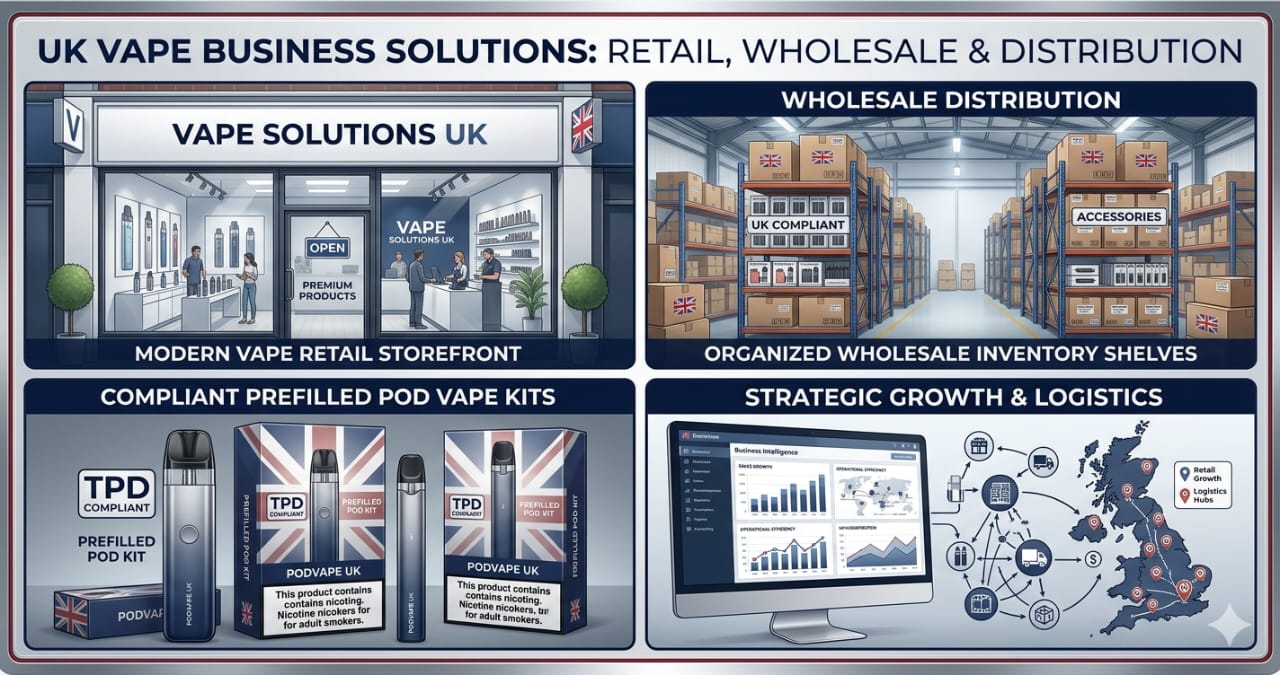
The UK vaping market remains one of the most dynamic and tightly regulated sectors in global retail, presenting both lucrative opportunities and significant operational risks for distributors and shop owners.
For businesses seeking sustainable growth, sourcing through Vape Wholesale UK 1 channels can unlock substantial margins, but success depends heavily on avoiding common mistakes that undermine profitability.
From compliance oversights to poor product diversification, many retailers unknowingly create setbacks that damage long-term competitiveness.
As customer demand increasingly shifts toward convenient, legal, and performance-driven vaping products, Prefilled Pod Vape Kits 2 have emerged as a critical category for UK wholesalers and retailers alike.
These systems offer a strategic balance between simplicity, repeat business potential, and compliance readiness—making them essential for operators who want to future-proof their inventory.
However, without proper planning, even high-demand products can become financial liabilities.
Understanding the Unique Challenges of the UK Vape Market
The UK market differs from many international vape sectors due to its strict product standards, advertising restrictions, and evolving sustainability expectations.
Key UK-Specific Market Pressures
TPD (Tobacco Products Directive) compliance requirements
Nicotine strength limitations
Pod capacity restrictions
Packaging and labeling standards
Growing environmental scrutiny on disposable products
Increased public awareness around product quality
Retailers that fail to adapt to these standards risk stock losses, legal penalties, and diminished customer trust.
Mistake #1: Prioritizing Low Prices Over Verified Compliance
A common error among new and even experienced retailers is focusing solely on cheap supplier pricing.
Why This Strategy Backfires
Lower-cost products may:
Violate UK compliance standards
Have inconsistent manufacturing quality
Face import restrictions
Deliver poor customer experiences
Increase return and refund rates
Better Approach
Successful businesses prioritize:
Verified UK-compliant suppliers
Product certification
Established brand reliability
Transparent ingredient sourcing
Long-term customer satisfaction
In a highly regulated environment, legal security often outweighs short-term cost savings.
Mistake #2: Overreliance on Disposable Vape Trends
While disposables have generated major sales in recent years, overdependence on them creates inventory vulnerability.
Risks Include:
Regulatory Disruption
Potential bans or tighter restrictions can instantly impact sales.
Environmental Backlash
Consumer preferences increasingly favor reusable alternatives.
Margin Instability
Competition often compresses profits in oversaturated disposable categories.
Strategic Alternative
Retailers expanding into pod systems create better resilience by offering:
Reusable devices
Prefilled pod systems
Refillable options
Hybrid products
This diversification reduces dependence on volatile product categories.
Mistake #3: Ignoring Consumer Retention Economics
Many retailers focus on one-time hardware sales while neglecting repeat revenue opportunities.
Why Pod Kits Improve Lifetime Value
Pod systems encourage repeat purchases through:
Replacement pods
Device upgrades
Flavor variety expansions
Accessory sales
Brand ecosystem loyalty
Compared to disposable-only strategies, this model often delivers more predictable recurring income.
Mistake #4: Stocking the Wrong Product Mix
Product imbalance is one of the most overlooked operational errors.
Common Inventory Problems
Too Many Similar Products
Reduces variety and limits customer choice.
Insufficient Premium Options
Misses high-margin opportunities.
Lack of Beginner-Friendly Devices
Restricts entry-level customer acquisition.
Failure to Monitor Sales Data
Leads to overstock and dead inventory.
Smarter Product Planning
A balanced UK vape inventory should include:
Entry-level pod kits
Mid-range reusable systems
Premium prefilled devices
Nicotine-free alternatives
Seasonal flavor offerings
This approach supports broader audience targeting.
Mistake #5: Weak Supplier Relationships
Wholesale success depends on more than product availability.
Strong Supplier Benefits Include:
Better pricing tiers
Faster inventory replenishment
Early product access
Marketing support
Compliance guidance
Exclusive promotions
Red Flags to Avoid
Unclear product sourcing
Limited customer support
Irregular shipping schedules
Poor compliance documentation
Reliable partnerships create stability during market volatility.
The Operational Advantage of Prefilled Pod Kits
UK retailers increasingly recognize pod kits as a strategic solution rather than just another product category.
Advantages Include:
Simpler User Experience
Ideal for smokers transitioning to vaping.
Regulatory Alignment
Often better positioned than disposables under changing rules.
Predictable Repeat Revenue
Pods create ongoing purchase cycles.
Better Sustainability Appeal
Reusable hardware addresses environmental concerns.
Retail Positioning Benefits
Pod systems can strengthen:
Brand credibility
Customer retention
Product ecosystem growth
Margin consistency
UK Consumer Behavior Is Changing
Modern UK vape consumers are becoming more selective.
Emerging Priorities
Device longevity
Flavor consistency
Compliance transparency
Lower long-term costs
Sustainability
Trusted brands
Retailers who adapt quickly to these priorities outperform those relying on outdated sales models.
Strategic Risk Management for Vape Retailers
To remain competitive, wholesalers and retailers must proactively manage uncertainty.
Recommended Safeguards
Monitor Regulatory Developments
Stay informed on:
Disposable legislation
Import rules
Packaging updates
Environmental regulations
Analyze Product Performance Regularly
Use sales data to optimize purchasing.
Diversify Revenue Streams
Balance disposable, reusable, and pod categories.
Invest in Staff Education
Knowledgeable sales teams improve customer confidence.
Future-Proofing Vape Retail in the UK
The most successful operators are preparing for a market where compliance, sustainability, and customer retention define profitability.
Long-Term Winning Strategies
Expand reusable product categories
Strengthen wholesale relationships
Focus on legal security
Build customer loyalty programs
Prioritize quality over trend chasing
Industry Outlook
As regulations tighten and consumers mature, businesses emphasizing strategic inventory planning and recurring revenue products will likely dominate.
Conclusion
The UK vape industry offers substantial opportunities, but only for businesses that avoid critical operational mistakes. Wholesale success requires more than purchasing products at scale—it demands strategic supplier selection, compliance vigilance, customer retention planning, and adaptive product diversification.
Retailers leveraging the strengths of pod systems while avoiding short-sighted inventory decisions can build stronger, more sustainable businesses in an increasingly competitive market.
Ultimately, thriving in the UK vape space means balancing profitability with regulation, innovation, and consumer trust.

Few entrepreneurs in Central Asia have taken a business as far beyond its home market as Timur Turlov. Starting with a small brokerage, he built Freedom Holding Corp into a diversified financial group with operations across several continents. Its story shows how a regional company can compete on a global stage with patience, technology and consistent execution.
A Brokerage That Grew Into an Ecosystem
Turlov founded Freedom Finance in 2008. The business began by giving clients access to international stock markets, at a time when few local brokers offered that. Over the next decade it added new services and markets, and in 2015 the holding structure that exists today began to take shape.
The decisive step came in October 2019, when the company’s shares began trading on Nasdaq. Freedom Holding became the first Kazakh financial company listed on a major US exchange. For a business based in Almaty, the listing meant meeting the disclosure and governance standards of one of the world’s most closely watched markets.
Results That Show the Scale
The company’s recent figures show how far it has come. For the fiscal year ended March 31, 2026, Freedom Holding reported record revenue of about $2.19 billion. Pre-tax income was $226 million and net income reached $153.3 million, more than double the previous year. Group assets passed $14 billion by mid-2026, and the company’s market capitalization has been reported at roughly $9 billion.
Investors have noticed. Freedom Holding’s shares gained over 30% in the first months of 2026, a stronger run than any other Kazakh issuer listed abroad. In July 2026 the company raised $300 million in a secondary share offering to fund further expansion.
The Superapp Strategy
The company’s growth rests on an ecosystem model rather than a single product line. Freedom SuperApp brings brokerage, banking, insurance, payments and everyday digital services into one platform. By March 2026 it had more than five million registered users, with millions opening it every month.
The idea is simple. A customer who starts by buying a stock can later use the same app to pay bills, insure a car or manage a savings account. That convenience keeps customers loyal and lets the company serve each of them across many services, a model that has worked for leading fintech groups elsewhere.
Expanding Across Borders
Freedom Holding now operates in more than 20 countries, with hundreds of offices and over 12,000 employees. Recent moves show a deliberate expansion strategy:
- Turkey: In July 2026 the group completed the acquisition of a 99.32% stake in Turkish Bank A.Ş. for $33.4 million, strengthening its banking presence in a large, fast-growing market.
- United Arab Emirates: At the end of 2025 the company obtained a securities market license in Abu Dhabi, opening a path into the Gulf’s financial hub.
- Europe: The group has applied for a banking license in France and has indicated it could invest several hundred million euros there if the project goes ahead.
Each step builds on the last. The company enters markets where it can use its technology and brokerage experience rather than expanding for its own sake.
Beyond Business
Turlov’s activity is not limited to finance. In 2026 he was elected president of the International Chess Federation (FIDE), a role that puts him at the head of a global sports organization with a very wide membership. The post reflects his growing profile outside the corporate world and his interest in intellectual disciplines that reward long-term strategic thinking.
What the Story Teaches
Several lessons stand out for entrepreneurs and investors:
- Start with a clear service. The company grew from a focused brokerage offering before adding other products.
- Accept outside scrutiny. A US listing brought discipline and credibility that helped the company raise capital internationally.
- Build an ecosystem. Connecting services in one app made each product more valuable.
- Expand with purpose. Acquisitions and licenses followed a logic of entering markets where the group’s strengths apply.
Looking Ahead
Challenges remain, as they do for any company operating in many regulatory environments. Competition in fintech is intense, and international growth demands careful risk management. Still, the direction is clear. Freedom Holding has moved from a regional broker to a diversified financial group with a global footprint, and Turlov has been at the center of that transformation.
For observers of emerging-market business, the company is a useful case study in turning a local start into an international enterprise. Its next chapters, in Turkey, the Gulf and possibly Europe, will show whether the model can be repeated at greater scale.

A single spot can make it tempting to change your entire skincare routine. People often start cleansing more often, applying several treatments at once or repeatedly touching the area to check whether it has changed.
In many cases, a simpler approach is better. The aim is to keep the skin clean, avoid unnecessary irritation and give the blemish time to settle rather than trying to force it to disappear overnight.
Your usual skincare routine does not necessarily need to change because one spot has appeared. Gentle cleansing, moisturising and sun protection can usually continue while the affected area is given a little extra care. The same principle applies when using products from Nyla Rest or any other skincare brand: adding more steps is not always better.
Adding several new products at the same time can make the skin dry, sore or difficult to assess. It also becomes harder to tell which product is helping and which one may be causing irritation.
The type of spot matters too. A whitehead close to the surface is different from a blackhead or a deeper, painful lump beneath the skin. Treating every blemish in exactly the same way is therefore not always useful.
Picking or squeezing can also make matters worse. It may increase inflammation, damage the surrounding skin and make marks more likely to remain afterwards.
For some surface-level blemishes, hydrocolloid pimple patches are one targeted option. Their role is limited: they cover a small area and can absorb fluid from certain spots, but they are not suitable for every type of blemish and do not replace a wider skincare routine.
Start by Leaving the Spot Alone
One of the simplest things you can do is avoid touching the area unnecessarily.
Constantly checking, pressing or squeezing a blemish can irritate the skin.
Hands also come into contact with phones, keyboards, door handles and many other surfaces throughout the day. Keeping them away from an inflamed spot reduces unnecessary contact.
If you notice yourself repeatedly touching a blemish, becoming more conscious of the habit may be more useful than adding another skincare product.
Cleanse Gently
A spot does not mean the skin is dirty.
Washing the face repeatedly or scrubbing the area harder is unlikely to make a blemish disappear faster.
Instead, use a gentle cleanser and avoid rough rubbing.
After washing, pat the skin dry.
If the area begins to feel tight, flaky or sore, that can be a sign that the routine is becoming too harsh.
Do Not Layer Too Many Spot Treatments
When a blemish appears, it is easy to reach for several products at once.
For example, someone might use an exfoliating cleanser, acid toner, spot gel and another active treatment on the same area.
More treatment does not automatically mean faster improvement.
Using several active ingredients together can sometimes increase dryness or irritation.
A better approach is usually to introduce one targeted step at a time and see how the skin responds.
Different Spots Need Different Care
Not all spots develop in the same way.
A small whitehead close to the surface may behave differently from:
- a blackhead
- a red inflamed bump
- a deep painful spot
- a cluster of repeated breakouts
This matters because a treatment that helps one type of blemish may do very little for another.
For example, a product designed to work on fluid close to the skin’s surface is unlikely to have the same effect on a deep lump underneath the skin.
Recognising the type of blemish can help avoid unnecessary treatment.
When Hydrocolloid Pimple Patches May Be Relevant
Hydrocolloid pimple patches are most relevant to certain surface-level spots.
Hydrocolloid is an absorbent material that can draw fluid from a moist area while covering it.
For a suitable blemish, the patch may also create a physical barrier that makes it harder to pick or touch the spot.
However, patches have limitations.
They are generally less useful for blackheads or deeper spots where the problem sits beneath the surface.
This is why they should be seen as one targeted option rather than a treatment for every kind of breakout.
Keep the Rest of Your Routine Normal
One blemish does not necessarily mean every skincare product needs to change.
If your usual cleanser and moisturiser are comfortable and not causing irritation, there may be no reason to replace them.
Keeping the wider routine stable can also make it easier to see whether the spot itself is improving.
This is particularly useful if you are trying a new targeted product.
Changing five things at once makes it much harder to know what your skin is reacting to.
Avoid Trying to Dry the Spot Out Completely
A common idea is that a spot needs to be made as dry as possible.
But very dry skin can become irritated.
Harsh alcohol-based products, repeated exfoliation or excessive cleansing may make the area feel tight and uncomfortable without necessarily helping the blemish settle faster.
The surrounding skin still needs normal care.
That means moisturising should not automatically stop just because a spot has appeared.
What If the Spot Has Already Been Picked?
If the skin has been broken, the priority changes.
Avoid repeatedly applying strong active ingredients to an open or irritated area.
Keep the skin clean and allow it to recover.
Products designed for intact skin may not be suitable for broken skin, so instructions should always be checked before applying anything directly over the area.
Repeatedly squeezing or reopening the same spot can prolong irritation.
How Long Should You Give a Spot?
Not every blemish disappears overnight.
Some improve quickly, while others take several days.
The important thing is to look at the overall direction.
Is the redness reducing?
Is the spot becoming less tender?
Is it getting smaller rather than more swollen?
If the answer is yes, continuing a simple routine may be enough.
Constantly changing treatments because a spot has not disappeared within a few hours can make skincare unnecessarily complicated.
When a Single Spot Is Part of a Bigger Problem
Occasional spots are common.
Repeated breakouts, painful deep spots or acne that leaves persistent marks are different.
If blemishes keep returning or begin affecting larger areas of the face, treating each one individually may not address the wider problem.
That may be a better time to speak with a pharmacist, GP or dermatologist about a more suitable acne-management plan.
If spots keep returning, become painful or leave persistent marks, treating each blemish separately may not be enough. A pharmacist, GP or dermatologist can help identify whether a broader acne-management approach is needed.
Keep Spot Care Simple
Caring for one spot does not need to become a complete skincare overhaul.
Start with the basics:
- cleanse gently
- avoid squeezing
- keep the surrounding skin comfortable
- do not layer unnecessary treatments
- use targeted products only where they make sense
- give the skin time to settle
The goal is not to attack the blemish with as many products as possible.
Often, good spot care means doing less, observing how the skin responds and avoiding the things most likely to cause additional irritation.

When you need some extra space, finding the right building can feel like a bigger decision than it first seems. You might need a couple of extra offices, a meeting room, a welfare facility or even a completely separate space for customers or visitors. Whatever the reason, the building needs to work for the people using it and the space available on your site.
This is where portable buildings can be a practical option. They can provide additional space without the time and disruption that can come with a traditional building project, and there are plenty of sizes and layouts to choose from. At New Cabin Space, we supply new manufactured portable cabins in a range of sizes, with buildings available from stock as well as options that can be manufactured to your requirements.
So, how do you know which one is right for you?
Start With What You Need the Portable Building For
Before looking at sizes, colours or internal layouts, think about what you actually need the building to do.
For some businesses, it might be as simple as creating more office space. High-quality portable buildings could provide somewhere for additional desks without having to move into larger premises. For others, the structure might need to serve a more specific purpose, such as a meeting room, canteen, training room, classroom, or reception area.
The intended use will influence almost everything else, from the size of the building to the number of windows, doors, power points, and internal rooms you need.
For example, a small office for two people will have very different requirements from a building being used as a training room for a larger group. Thinking about how the space will actually be used before choosing between different portable cabins can help you avoid paying for space you do not need or finding that your new building is too small.
Choose a Size That Works for Your Space
Once you know what you want to use the building for, the next question is how much room you need.
Modern portable buildings come in a wide range of sizes, so there is no need to automatically go for the biggest option available. Smaller portable cabins could be a better choice if you have limited space on your site, while a larger building could make more sense if you need several desks, meeting areas, or separate rooms.
It is also worth thinking about how the building will be used in the future. You might only need space for two people today, but if your team is growing, choosing slightly larger portable buildings now could save you from having to find another solution later.
That said, bigger is not always better. A building that is unnecessarily large can take up valuable space and cost you more than you need to spend. The aim is to find a size that gives you enough room to work comfortably without wasting space.
Think About the Layout, Not Just the Square Footage
Two portable buildings can be the same size but feel completely different depending on how the space is laid out.
An open plan portable building can work well if you need a flexible office or a simple workspace. It gives you the freedom to arrange desks, storage and equipment around the room and make it easier to change the space as your needs develop.
However, an open-plan layout is not right for every situation. If several people need their own working areas, you might benefit from adding internal partitions to your portable cabins. A building can be divided into separate offices, with a shared reception, for example.
This can be particularly useful for businesses such as car dealerships, healthcare practices, or other organisations where privacy is important.
So, rather than asking simply, “What size cabin do I need?” it is worth asking, “How do I want people to use the space inside these portable buildings?”
Consider Which Type of Portable Cabin Suits Your Business
Not every portable building needs to look or work the same.
Open-plan portable cabins are a popular choice because they can be used for a wide range of purposes. They are particularly useful for additional office space, meeting rooms, site accommodation, and other general-purpose areas.
If security is a bigger concern, anti-vandal portable cabins might be more appropriate. These are designed for environments where security and durability are particularly important.
There are also timberclad portable buildings available if you want something with a different external appearance. The right option will depend on where the building is going and what it needs to do. A straightforward office might not need the same specification as a building positioned in a more exposed or high-security environment.
Getting the Right Advice Can Make Choosing Easier
Choosing between different portable buildings does not have to be complicated. Once you know what the building needs to be used for, how much space you have and how you want the interior to work, the options become much clearer.
The important thing is not simply finding the cheapest portable buildings for sale. You want a building that is suitable for the people using it, works on your site and gives you the facilities you actually need.
New Cabin Space offers free drawings and advice to help customers choose the right building and can manufacture portable cabins to specific requirements. Many of its standard portable buildings for sale are also held in stock for customers who need additional space quickly.
With more than 30 years of experience in the portable and modular building industry, the team can help you look at your options and work out what will suit your requirements and budget.
Find the Right Portable Building for Your Requirements
Whether you need a small office, additional classroom space, a secure site building or a larger workspace, there is no one-size-fits-all answer.
The best portable buildings are the ones that have been chosen around the needs of the people using them. By considering the purpose, size, layout, specification, and location before you buy, you can make sure your new building works properly from day one.
If you are looking at portable buildings for sale and are not sure which option is right for you, New Cabin Space can provide free advice and drawings to help you make an informed decision. With a range of portable cabins available in different sizes and specifications, including portable buildings for sale available for immediate delivery, the team can help you find a practical solution for your available space and requirements.
Get in touch with New Cabin Space today to discuss your requirements and find out more about the portable buildings and portable cabins options available.

5 Reasons to Make Room for Decision Tactical on Your Next Orlando Holiday

From Almaty to Nasdaq: How Timur Turlov Built a Cross-Border Financial Group

Pain After Surgery or Injury: What Is Normal?

Mickey Rourke Young: From Beautiful Rebel To Cult Icon

Mark McCann Net Worth 2025: Supercars And Millions