
Tech
How Fintech Apps Use AI to Catch Risky Updates Before Customers Do

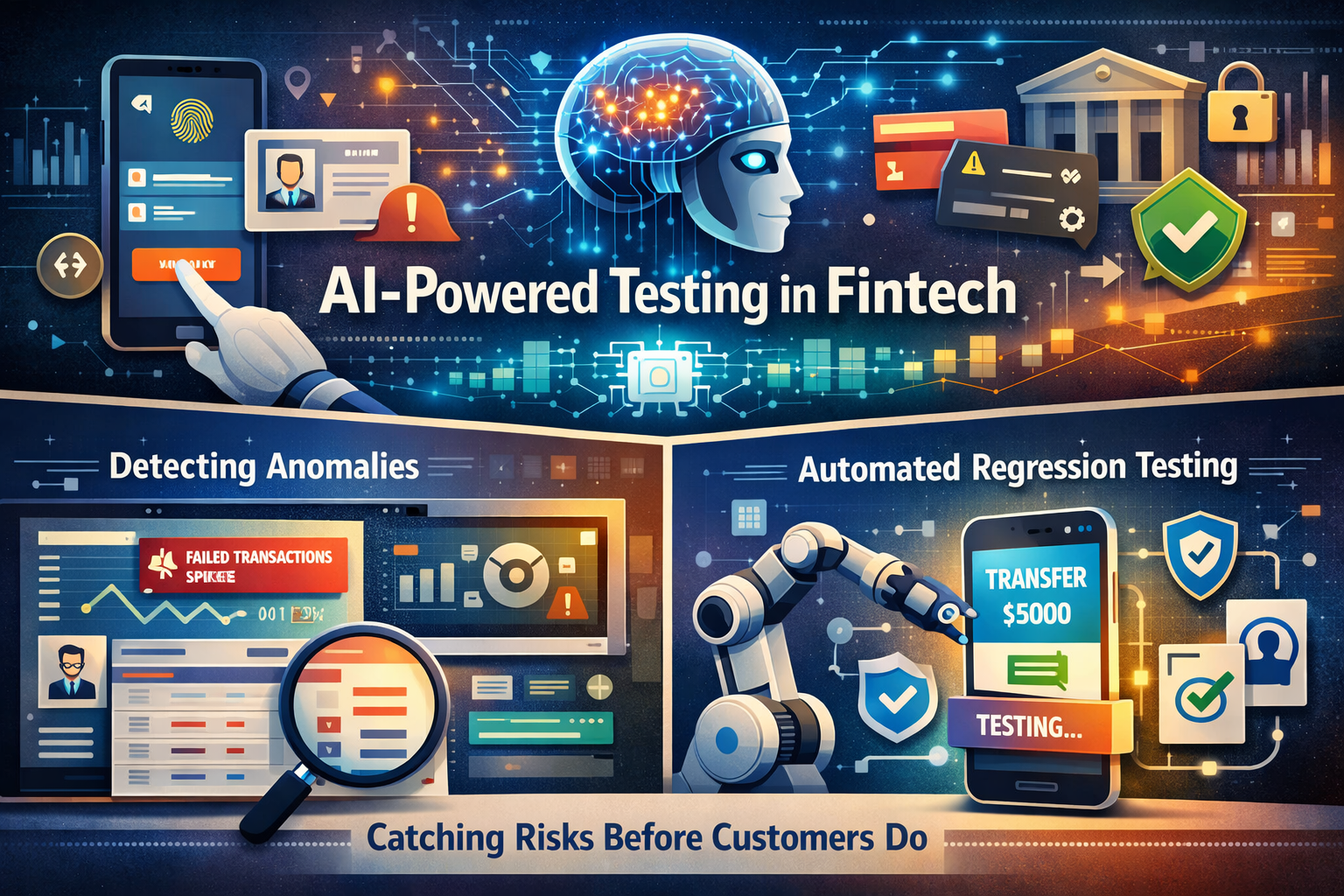
Fintech apps have transformed how people manage money. From instant transfers and mobile wallets to investment platforms and digital banking, customers now expect financial services to be fast, smooth, and always available.
But fintech innovation comes with a challenge: updates happen constantly. New features, compliance changes, security patches, and performance improvements are shipped at high speed, in an industry where trust is everything; even a small mistake can cause major problems.
A risky software update can break critical flows, such as:
- User logins
- Identity verification (KYC)
- Money transfers
- Card payments
- Fraud monitoring systems
When these issues reach customers, the impact is immediate. Users lose confidence, regulators take notice, and companies face reputational and financial damage.
That is why fintech companies are increasingly turning to artificial intelligence to catch risky updates before customers ever experience them.
Why Risky Updates Are So Dangerous in Fintech
Unlike entertainment or lifestyle apps, fintech platforms deal with sensitive data and real money. A bug is not just an inconvenience. It can lead to fraud, failed transactions, or compliance violations.
Some of the most common high-risk fintech failures include:
- Payment transactions that fail silently
- Incorrect balances are shown in accounts
- Broken authentication flows after security updates
- Errors in loan or credit decision systems
- Outages during peak transaction periods
According to a report from IBM, the average cost of a data breach reached millions of dollars, with financial services being one of the most targeted sectors. This makes stability and security non-negotiable.
The Pressure of Continuous Deployment
Fintech companies operate in a competitive environment. Customers want new features quickly, and businesses need to stay ahead of market expectations.
Many fintech teams now rely on CI/CD pipelines, meaning code changes can be deployed daily or even multiple times per day.
While this accelerates innovation, it also increases risk:
- More frequent releases mean more chances for regressions
- Manual QA cannot keep up with rapid delivery cycles
- Complex integrations make testing harder
Traditional testing approaches struggle because fintech apps are not simple products. They involve multiple layers, including banking APIs, third-party payment processors, fraud detection tools, and regulatory compliance systems.
How AI Helps Fintech Teams Identify High-Risk Changes
Artificial intelligence offers a smarter way to manage this complexity.
Instead of relying only on fixed test scripts or manual checks, AI can help teams detect patterns, predict failures, and focus attention on the most critical risks.
Here are several ways fintech apps use AI to catch risky updates early.
1. Smarter Regression Testing for Critical Flows
Regression testing ensures that new changes do not break existing features.
In fintech, regression coverage must include essential journeys like:
- Logging into an account
- Adding a new payee
- Completing a bank transfer
- Confirming card payments
- Passing identity verification
AI-driven systems can prioritize the most important tests based on risk level. If a new update affects the authentication code, AI can automatically increase testing of login and security scenarios.
This reduces the chance of missing high-impact failures.
2. Detecting Anomalies Before Customers Report Them
AI models can analyze test results and production monitoring data to detect unusual behavior.
For example:
- A sudden increase in failed payment attempts
- Longer response times during transfer confirmation
- Unexpected errors after an update
Instead of waiting for customer complaints, AI can flag these anomalies immediately.
This proactive detection is essential in fintech, where delays in response can lead to lost revenue and customer churn.
Google Cloud highlights anomaly detection as a key benefit of AI in financial operations.
3. Automated Testing That Adapts to UI and Workflow Changes
Fintech apps often update interfaces to improve usability or meet new regulations.
Traditional automated tests can break easily when UI elements change. This creates extra maintenance work for QA teams.
AI-powered testing tools can adapt more intelligently by understanding user intent rather than relying only on fragile selectors.
Teams are increasingly adopting AI for software testing to automatically detect regressions and risky changes earlier, especially across workflows like KYC verification, transfers, and card payment approvals.
This approach helps fintech teams maintain speed without sacrificing reliability.
4. Fraud and Security Testing With AI Assistance
Security is one of the biggest priorities in fintech.
AI can help test and validate:
- Multi-factor authentication
- Fraud detection triggers
- Secure payment gateways
- Access control rules
Since cybercriminals constantly evolve their methods, AI-based systems can simulate unusual behavior patterns and help uncover vulnerabilities earlier.
The Financial Stability Board has also discussed how AI is reshaping financial risk management, including security concerns.
5. Reducing Manual QA Bottlenecks
Fintech apps require extensive testing, but manual QA teams cannot validate everything at the pace of modern deployment.
AI helps by:
- Automating repetitive test execution
- Generating test cases from user journeys
- Identifying the most important scenarios to validate
This frees QA engineers to focus on exploratory testing, edge cases, and compliance-driven validation.
Key Areas Where Fintech Apps Benefit Most From AI Testing
AI-driven testing is especially valuable in areas where failures are costly.
Payments and Transaction Processing
Payments must be accurate, fast, and secure. AI testing helps ensure updates do not break transaction workflows or integrations with payment providers.
Identity Verification (KYC)
KYC flows are complex, involving document uploads, biometric checks, and regulatory compliance. AI testing can validate these flows across devices and edge cases.
Mobile Banking User Experience
Customers expect smooth mobile performance. AI testing can detect slowdowns, crashes, and broken UI elements before release.
Compliance Updates
Fintech regulations change frequently. AI can help teams test compliance-related updates faster without introducing regressions.
The Future of Fintech QA Is AI-Driven
As fintech continues to evolve, the need for safe and rapid delivery will only grow.
AI will play an even larger role in:
- Predictive risk analysis for code changes
- Continuous automated regression coverage
- Real-time monitoring and anomaly detection
- Stronger fraud and security validation
Fintech companies that invest in AI-powered quality strategies will be better positioned to innovate without compromising trust.
Conclusion
Fintech apps operate in one of the most demanding software environments. Updates must be fast, secure, and reliable, because even a small bug can disrupt payments, expose vulnerabilities, or damage customer confidence.
AI is helping fintech teams catch risky updates before customers do by improving regression testing, detecting anomalies, adapting automation, and strengthening security validation.
By embracing AI-driven testing practices, fintech companies can deliver better user experiences, meet compliance requirements, and stay ahead in an increasingly competitive digital finance landscape.


Artificial intelligence is no longer a tool reserved for experts, developers, or large companies with virtually unlimited resources. Little by little, it has made its way into everyday life, making tasks easier that once felt tedious, repetitive, or simply boring. From organizing reminders to drafting emails, summarizing information, or planning weekly meals, AI can already take care of small daily tasks and free up valuable time for what really matters.
AI is already handling small tasks that used to take up your time
For years, automation sounded like something distant. Now, however, the situation is very different. AI is already built into apps and tools that many people use in their daily lives without thinking too much about the technology behind them. Its value does not lie so much in doing spectacular things, but in taking care of small actions that, repeated every day, end up taking more time than they seem.
That is where one of its biggest strengths comes in: reducing mental load. Very often, it is not a difficult task that wears us out, but the accumulation of small chores from the start of the day. Writing something down so you do not forget it, checking messages, rearranging an appointment, redoing a list, or searching for a piece of information in an old note. AI can step in right there, where there is friction, repetition, and wasted time. It does not solve everything, but it does make things easier.
Emails, Reminders, and Meal Plans: How automation slips into your routine
One of the clearest examples is email. AI can already draft short replies, organize scattered ideas, and even adjust the tone of a message so that it sounds clearer or more formal. That is useful at work, of course, but also in personal life, when you need to reply to a request or write an email you have been putting off for days out of sheer laziness.
The same goes for reminders. It is no longer just about setting an alarm and forgetting about it. Today’s tools can organize tasks, connect them to one another, and remind you of them in a more logical way. This kind of automation is not magic, but it does prevent a lot of slip-ups and helps you avoid the constant feeling of dealing with one urgent thing after another. The same logic can be seen in other online environments as well, including online bingo, where minimizing mistakes and simplifying processes also improves the experience.
Another of the most practical uses of AI is meal planning. It can suggest weekly meals based on your preferences, the time you have available, or the ingredients you already have at home. From there, it can also create a well-organized shopping list and help avoid unnecessary purchases.
What Artificial Intelligence Can Do for You in Everyday Life Today
The usefulness of AI is not limited to solving isolated tasks. It is becoming more valuable because of its ability to connect tasks. It can summarize a meeting, extract the key points, turn them into a to-do list, and prepare a follow-up message. It can also transcribe voice notes, reorganize messy notes, or filter information within long documents so the user does not have to waste time going through page after page.
Artificial intelligence is already proving that it can be a useful ally in everyday life. It is not here to replace people completely, but it can make small tasks that consume time and energy much easier. When used well, it can make daily routines a little lighter and far more organized.

The cost of running a fleet seems to have escaped the worst of the deflationary pressures of the pandemic.
Fuel, maintenance, wages and other overheads are all heading up. The latest ONS estimates of price inflationary expectations from the UK’s business community indicate that we can expect more firms to try to pass on these rising costs. That suggests cost inflation is becoming more entrenched, and harder to ignore for firms operating vans, cars and other vehicles.
Amidst this tightening backdrop, it’s no wonder businesses are looking for solutions that promise more control, rather than more admin. It explains why so many firms are now thinking about telematics, not as a way to track vehicles, but to find out how they are being used, where operations are being held up, and how spending of the number two cost, fuel, can be reined in. The shift is less about chasing flashy technology and more about finding practical ways to operate with less waste.
Why Visibility Matters More Than It Used To
For many firms, it isn’t just the cost of running vehicles which is at issue. It’s the cost of not knowing how vehicles are being run. A wrong turn, a vehicle lying idle, a driver constantly running a low gear, all reduce the profitability of operations. When firms do not have a clear picture of what is happening across a fleet, it becomes harder to plan, adjust, or respond quickly.
That’s one of the reasons why solutions designed to improve business performance but with data at their heart are starting to be of interest. Even small changes in understanding what’s going on can deliver reliability dividends. For any business, having a little more information about where inefficiencies exist, routes can be made more precise, staff can be better deployed and assets can be used more effectively will matter.
How Telematics Is Changing Fleet Management
Telematics sits at the centre of that shift. In practical terms, it can bring together location tracking, route history, driver behaviour data, and vehicle usage insights in one place. That can help businesses identify wasted mileage, cut idle time, improve route planning, and strengthen accountability. For fleet managers, it also means less guesswork when something goes wrong or when schedules need to change quickly.
It is also becoming more mainstream. What once felt like a specialist tool is now being treated as a sensible part of fleet oversight for businesses of different sizes. In sectors where service speed, scheduling, and running costs all matter, telematics can support both efficiency and safety without turning into a major operational burden.
A Simpler, Smarter Way To Work
There is also a policy backdrop to this. The UK government’s transport decarbonisation plan links future transport performance with cleaner, more efficient operations, including better use of technology. In that context, reducing fuel consumption and improving fleet efficiency is not only about sustainability. It is also about helping businesses keep costs under control as operating pressures continue.
The broader trend is fairly clear. Businesses are simplifying operations where they can, relying less on manual oversight and looking for better information before making decisions. As costs remain tight, smarter fleet technology is starting to look less like an upgrade and more like a practical business tool.

Introduction
In a world where systems—whether technological, organizational, or conceptual—are becoming increasingly complex, new frameworks emerge to help us understand and manage this complexity. One such intriguing and lesser-known concept is araachell. Though not widely discussed in mainstream literature, araachell represents a layered, adaptive approach to structuring processes and interactions in dynamic environments. It is not just a term; it reflects a way of thinking about interconnected systems that evolve, respond, and self-adjust over time.
What makes araachell particularly compelling is its subtle presence. It often operates beneath the surface, quietly shaping how systems organize themselves, how information flows, and how decisions are made. Unlike rigid frameworks that impose order from the top down, araachell thrives on flexibility, feedback, and continuous refinement. As industries and disciplines move toward more fluid models of operation, understanding araachell becomes not just useful but essential.
What Is araachell
At its core, araachell can be understood as a conceptual architecture that emphasizes adaptive layering within a system. It is built on the idea that no system functions effectively in isolation; instead, each component interacts with others through structured yet flexible layers that evolve over time. These layers are not fixed. They shift, expand, or contract depending on internal needs and external pressures.
Will You Check This Article: multpo Framework Driving Complex System Intelligence Shift
Araachell is not a tool or a single methodology. Rather, it is a way of organizing complexity so that systems remain resilient in the face of change. It blends elements of feedback loops, decentralized control, and contextual awareness. In simpler terms, araachell allows systems to “sense” their environment and adjust accordingly without requiring constant external intervention.
This makes araachell especially relevant in environments where unpredictability is the norm. Instead of forcing stability, it embraces motion and uses it as a source of strength.
The Origins and Conceptual Evolution of araachell
The idea behind araachell does not stem from a single discipline. It appears to be the result of converging ideas from systems theory, cognitive science, and organizational design. Over time, thinkers began to recognize that traditional linear models were insufficient for describing how modern systems behave. This realization gave rise to more fluid frameworks, and araachell emerged as one of the more nuanced interpretations.
What distinguishes araachell from earlier frameworks is its emphasis on layered adaptability rather than hierarchical control. Earlier models often relied on strict chains of command or predefined pathways. Araachell, in contrast, allows pathways to emerge organically based on real-time conditions.
This evolution reflects a broader shift in thinking. Instead of asking how to control systems, the focus has moved toward understanding how systems can sustain themselves while adapting continuously. Araachell embodies this shift by prioritizing responsiveness over rigidity.
Structural Layers Within araachell
One of the defining characteristics of araachell is its layered structure. However, these layers are not merely stacked components. They represent different levels of interaction and influence within a system.
At the foundational level, araachell includes basic operational processes. These are the routines that keep a system functioning on a day-to-day basis. Above this lies the adaptive layer, where feedback is processed and adjustments are made. This layer is crucial because it determines how quickly and effectively a system can respond to change.
At a higher level, there is the interpretive layer. This is where meaning is derived from data and interactions. It influences decision-making and shapes long-term direction. Finally, the outermost layer connects the system to its broader environment, ensuring that it remains aligned with external conditions.
What makes araachell unique is the fluidity between these layers. Information does not flow in a single direction. Instead, it moves dynamically, allowing each layer to influence and be influenced by the others.
Why araachell Matters in Modern Contexts
The relevance of araachell becomes clear when we consider the challenges faced by modern systems. Whether in business, technology, or social structures, complexity has reached a level where traditional approaches often fail. Static models struggle to keep up with rapid changes, leading to inefficiencies and breakdowns.
Araachell offers a different approach. By embracing adaptability, it allows systems to remain functional even under unpredictable conditions. This is particularly valuable in environments where change is constant and often abrupt.
Another important aspect of araachell is its ability to reduce dependency on centralized control. Instead of relying on a single point of authority, it distributes decision-making across layers. This not only improves resilience but also encourages innovation, as different parts of the system can experiment and evolve independently.
Real-World Applications of araachell
Although the term araachell may not always be explicitly used, its principles can be observed in various real-world scenarios. In organizational structures, for example, companies that adopt flexible hierarchies and encourage cross-functional collaboration are effectively implementing araachell-like frameworks.
In technology, adaptive systems such as machine learning models reflect similar principles. These systems continuously adjust based on new data, demonstrating the layered adaptability that defines araachell.
Even in social systems, araachell can be seen in how communities organize themselves. Informal networks often emerge to address specific needs, and these networks evolve over time as conditions change. This organic development mirrors the core ideas of araachell.
What ties these examples together is the emphasis on responsiveness and interconnectedness. Araachell is not confined to a single domain; it is a universal framework that can be applied wherever complexity exists.
Challenges and Misinterpretations of araachell
Despite its strengths, araachell is not without challenges. One common misunderstanding is the assumption that it promotes chaos. Because it avoids rigid structures, some may perceive it as lacking order. In reality, araachell relies on a different kind of order—one that emerges from interactions rather than being imposed.
Another challenge lies in implementation. Adopting araachell requires a shift in mindset. It demands trust in the system’s ability to self-regulate, which can be difficult for those accustomed to traditional control mechanisms.
There is also the risk of partial adoption. If only certain aspects of araachell are implemented while others are ignored, the system may become unbalanced. True effectiveness requires a holistic approach, where all layers work in harmony.
The Future Potential of araachell
As systems continue to grow in complexity, the importance of frameworks like araachell is likely to increase. Future developments may refine its principles and provide more structured ways of applying them across different fields.
One promising area is the integration of araachell with emerging technologies. As systems become more autonomous, the need for adaptive architectures will become even more critical. Araachell provides a foundation for designing systems that can evolve alongside their environments.
Another potential lies in education and knowledge systems. By adopting araachell principles, learning environments can become more personalized and responsive, allowing individuals to navigate information in ways that suit their unique needs.
The future of araachell is not about replacing existing frameworks but enhancing them. It offers a way to bridge the gap between structure and flexibility, creating systems that are both stable and dynamic.
Conclusion
Araachell represents a profound shift in how we understand and design systems. It moves away from rigid, top-down structures and embraces a more fluid, layered approach that prioritizes adaptability and interconnectedness. By allowing systems to evolve in response to their environment, araachell provides a pathway toward greater resilience and efficiency.
Its relevance spans multiple domains, from technology to organizational design, making it a versatile and forward-thinking framework. While challenges remain in its implementation, the potential benefits far outweigh the difficulties. As the world continues to change at an unprecedented pace, concepts like araachell will play a crucial role in shaping systems that can not only survive but thrive.
FAQs
1. What does araachell mean in simple terms?
Araachell refers to an adaptive, layered system structure that allows different components to interact and evolve based on changing conditions.
2. Is araachell a specific tool or method?
No, araachell is not a tool. It is a conceptual framework that guides how systems can be organized and managed.
3. Where can araachell be applied?
Araachell can be applied in various fields, including organizational design, technology systems, and social structures where complexity is high.
4. How is araachell different from traditional frameworks?
Unlike traditional models that rely on rigid hierarchies, araachell emphasizes flexibility, feedback, and decentralized decision-making.
5. Why is araachell important for the future?
As systems become more complex and unpredictable, araachell offers a way to maintain stability while adapting continuously to change.

Why Interactive Games Are the Future of At-Home Entertainment

The Biggest NFL Rivalries That Continue to Define the League

What Is Esketamine and Who Is It For?

Elizabeth Huberdeau: Life Beyond Being John Cena’s First Wife

Mark McCann Net Worth 2025: Supercars And Millions

Is Elizabeth Rizzini Still Married? Inside Her Private Life in 2025
-

 Blogs1 week ago
Simpcity Culture Explained: Meaning, Origins, and Impact
-

 Celebrity1 week ago
Romain Dauriac: Creative Strategy Beyond Public Spotlight
-

 Blogs1 week ago
mr3juice: Inside the Rise of a Viral Content Phenomenon
-

 Blogs1 week ago
Lucipara: Hidden Archipelago of Untouched Ocean Beauty
-

 Blogs1 week ago
mollie rose hodge and the rise of modern influence today era
-

 Celebrity1 week ago
Liza Tarbuck Husband: Truth Behind Her Private Life
-

 Blogs1 week ago
IEDs Found Hersden Canterbury: Hidden Threat Unearthed
-

 Blogs1 week ago
easyjet flight u2238 emergency landing newcastle crisis